
Stop Vehicle, Leave Engine Running” – What It Means for Mercedes-Benz & EV Owners
Stop Vehicle, Leave Engine Running” – What It Means for Mercedes-Benz & EV Owners
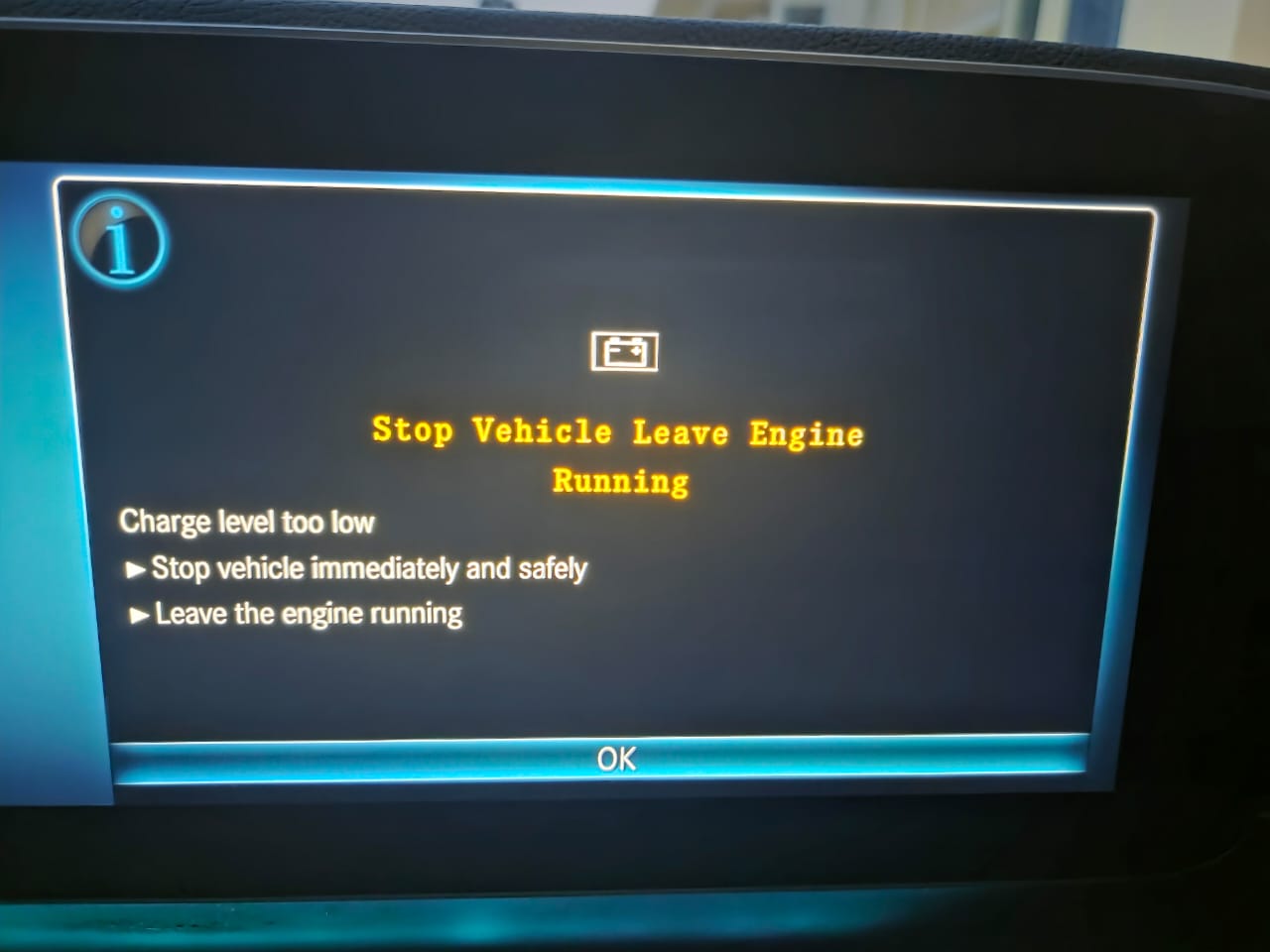
If you drive a Mercedes-Benz or an electric / hybrid vehicle, seeing the warning “Stop Vehicle, Leave Engine Running – Charge Level Too Low” can be alarming. Don’t panic—this message is common, important, and preventable.
This guide explains what the warning means, why it happens, what to do immediately, and how to prevent it in the future, especially in Nigeria’s driving conditions.
What Does “Charge Level Too Low” Mean?
This warning means the low-voltage system (12V or 48V battery) is critically low and can no longer support the vehicle’s electronics safely.
Modern cars—especially Mercedes-Benz and EVs—depend heavily on electrical systems to control:
- Steering assistance
- Braking systems
- Gear selection
- Dashboard & infotainment
- Safety modules
When voltage drops too low, the car may shut down unexpectedly.
Why the Car Says “Leave Engine Running”
In petrol or hybrid Mercedes vehicles, the engine powers the alternator or DC-DC converter, which recharges the low-voltage battery.
By leaving the engine running:
- The battery begins to recharge
- System voltage stabilizes
- The risk of sudden shutdown is reduced
⚠️ If you turn off the engine at this stage, the car may not restart.
What About Fully Electric Vehicles (EVs)?
In EVs, there is no alternator.
Instead:
- The high-voltage battery (HV) charges the 12V battery through a DC-DC converter
- If the 12V battery is weak or failing, the system may stop charging it
This is why many EV breakdowns are caused by the 12V battery, not the main traction battery.
Common Causes of This Warning
1. Weak or Failing 12V Battery
- Most common cause
- Batteries degrade faster in hot climates
- Even new EVs can fail due to a bad 12V unit
2. Charging System Fault
- Faulty alternator (ICE vehicles)
- Faulty DC-DC converter (EVs & hybrids)
3. Excessive Electrical Load
- AC, headlights, infotainment, seat heaters, sensors all running
- Short trips that don’t allow proper recharging
4. Software or Energy Management Errors
- Mercedes vehicles are very sensitive to voltage drops
- A single weak cell can trigger system-wide warnings
What You Should Do Immediately
✔ Stop in a safe place
✔ Leave the engine running (or vehicle ON for EVs)
✔ Turn off non-essential electrical loads
✔ Do not shut the vehicle down immediately
✔ Drive straight to a workshop for diagnosis
If the warning returns repeatedly, the battery is already failing.
Proper Diagnosis (Very Important)
A correct check should include:
- 12V battery health test (not just voltage)
- Charging current test
- Alternator or DC-DC output test
- Full system scan for energy management faults
Simply “boosting” the car is not a fix.
Can This Damage the Car?
Yes—if ignored:
- Vehicle may shut down while driving
- Gear selector may lock
- Steering may stiffen
- Electronic parking brake may engage
- ECU and control modules can log permanent faults
On Mercedes vehicles, low voltage causes cascading errors across multiple systems.
How to Prevent This Issue
- Replace 12V batteries before total failure
- Avoid leaving the car unused for long periods
- Don’t ignore early battery warnings
- Use correct battery type (AGM / Lithium as specified)
- Always reset battery adaptation after replacement (Mercedes-specific)
Why Mercedes & EV Owners See This More Often
- High electrical demand
- Sensitive voltage monitoring
- Advanced safety systems
- Complex software-controlled energy management
Older cars may “crank slowly.”
Mercedes and EVs warn you early—before failure.
Final Advice
That warning is not a suggestion—it’s a critical protection alert.
If you or your customer sees:
“Stop Vehicle, Leave Engine Running – Charge Level Too Low”
👉 Act immediately.
👉 Diagnose properly.
👉 Replace failing components early.
It saves money, prevents breakdowns, and protects expensive control modules.
Need a professional diagnosis or battery system check?
Always use a vehicle-specific diagnostic tool and follow manufacturer procedures—especially for Mercedes-Benz and EV platforms